
jueves, 9 de febrero de 2012


miércoles, 8 de febrero de 2012
Teléfonos de emergencia en el DF « Soy Citadino
Centro de Asistencia Juridica en Línea de la Consejería Jurídica y de Servicios Legales
5128-1122Honestel
5533-5533Denuncias por celular
5533Denuncia Ciudadana contra la extorsión telefónica
5533-5533Linea de Atencion a victimas de Trata de Personas
5346-8800Atención a Victimas del Delito
01800 0074533Teléfono de Atención de la Secretaría de Desarrollo Económico
5687-9270Centro de Atención a Migrantes y sus Familias.
Desde México: 01 800 009 11 11.
Desde EUA: 1 800 505 85 11Atención Ciudadana de la Secretaría de Educación
5080-5707, 5080-5708Justina te ayuda
5588-3388Locatel
5658-1111Atencion Ciudadana de la Secretaría de Obras y Servicios
072Emergencias mayores
5683-2222Bomberos
5768-2532Reporte de fugas de agua, baches y postes de luz
5654-3210Unidad Tormenta
5654-3210Policía
066Cruz Roja
065, 53-95-11-11Medicina a distancia de la Secretaría de Salud
5132-0909En todo el pais
01800 00 44 800CAS denuncia 24 Hr- 365 días
5208-9898Llamadas de emergencia Policía DF
066Denuncias Anónima Contra el Narcomenudeo y Delincuencia Organizada
089Información Turística
01800-0089090


Implicaciones Economicas Locales de una Red Urbana de Ciclocarriles | This Big City

Como la manera en que nos movemos en nuestra ciudad tiene implicaciones economicas, que fomentan o destruyen la economia local y la vida urbana de nuestra comunidad o vecindario.
martes, 7 de febrero de 2012

lunes, 6 de febrero de 2012
Eleven Principles for Creating Great Community Places | Metro Jacksonville
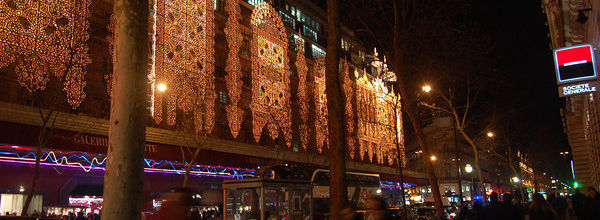
1. The Community Is The ExpertThe important starting point in developing a concept for any public space is to identify the talents and assets within the community. In any community there are people who can provide an historical perspective, valuable insights into how the area functions, and an understanding of the critical issues and what is meaningful to people. Tapping this information at the beginning of the process will help to create a sense of community ownership in the project that can be of great benefit to both the project sponsor and the community.
2. Create a Place, Not a Design
If your goal is to create a place (which we think it should be), a design will not be enough. To make an under-performing space into a vital “place,” physical elements must be introduced that would make people welcome and comfortable, such as seating and new landscaping, and also through “management” changes in the pedestrian circulation pattern and by developing more effective relationships between the surrounding retail and the activities going on in the public spaces. The goal is to create a place that has both a strong sense of community and a comfortable image, as well as a setting and activities and uses that collectively add up to something more than the sum of its often simple parts. This is easy to say, but difficult to accomplish.
3. Look for PartnersPartners are critical to the future success and image of a public space improvement project. Whether you want partners at the beginning to plan for the project or you want to brainstorm and develop scenarios with a dozen partners who might participate in the future, they are invaluable in providing support and getting a project off the ground. They can be local institutions, museums, schools and others.
4. You Can See a Lot Just By Observing
We can all learn a great deal from others’ successes and failures. By looking at how people are using (or not using) public spaces and finding out what they like and don’t like about them, it is possible to assess what makes them work or not work. Through these observations, it will be clear what kinds of activities are missing and what might be incorporated. And when the spaces are built, continuing to observe them will teach even more about how to evolve and manage them over time.
5. Have a VisionThe vision needs to come out of each individual community. However, essential to a vision for any public space is an idea of what kinds of activities might be happening in the space, a view that the space should be comfortable and have a good image, and that it should be an important place where people want to be. It should instill a sense of pride in the people who live and work in the surrounding area.
6. Start with the Petunias: Lighter, Quicker, Cheaper
The complexity of public spaces is such that you cannot expect to do everything right initially. The best spaces experiment with short term improvements that can be tested and refined over many years! Elements such as seating, outdoor cafes, public art, striping of crosswalks and pedestrian havens, community gardens and murals are examples of improvements that can be accomplished in a short time.
7. Triangulate“Triangulation is the process by which some external stimulus provides a linkage between people and prompts strangers to talk to other strangers as if they knew each other” (Holly Whyte). In a public space, the choice and arrangement of different elements in relation to each other can put the triangulation process in motion (or not). For example, if a bench, a wastebasket and a telephone are placed with no connection to each other, each may receive a very limited use, but when they are arranged together along with other amenities such as a coffee cart, they will naturally bring people together (or triangulate!). On a broader level, if a children’s reading room in a new library is located so that it is next to a children’s playground in a park and a food kiosk is added, more activity will occur than if these facilities were located separately.
8. They Always Say “It Can’t Be Done”
One of Yogi Berra’s great sayings is “If they say it can’t be done, it doesn’t always work out that way,” and we have found it to be appropriate for our work as well. Creating good public spaces is inevitably about encountering obstacles, because no one in either the public or private sectors has the job or responsibility to “create places.” For example, professionals such as traffic engineers, transit operators, urban planners and architects all have narrow definitions of their job – facilitating traffic or making trains run on time or creating long term schemes for building cities or designing buildings. Their job, evident in most cities, is not to create “places.” Starting with small scale community-nurturing improvements can demonstrate the importance of “places” and help to overcome obstacles.
9. Form Supports FunctionThe input from the community and potential partners, the understanding of how other spaces function, the experimentation, and overcoming the obstacles and naysayers provides the concept for the space. Although design is important, these other elements tell you what “form” you need to accomplish the future vision for the space.
10. Money Is Not the Issue
This statement can apply in a number of ways. For example, once you’ve put in the basic infrastructure of the public spaces, the elements that are added that will make it work (e.g., vendors, cafes, flowers and seating) will not be expensive. In addition, if the community and other partners are involved in programming and other activities, this can also reduce costs. More important is that by following these steps, people will have so much enthusiasm for the project that the cost is viewed much more broadly and consequently as not significant when compared with the benefits.
11. You Are Never Finished
By nature good public spaces that respond to the needs, the opinions and the ongoing changes of the community require attention. Amenities wear out, needs change and other things happen in an urban environment. Being open to the need for change and having the management flexibility to enact that change is what builds great public spaces and great cities and towns.
Source: http://www.pps.org/articles/11steps/
About PPSQuoteProject for Public Spaces (PPS) is a nonprofit planning, design and educational organization dedicated to helping people create and sustain public spaces that build stronger communities. Our pioneering Placemaking approach helps citizens transform their public spaces into vital places that highlight local assets, spur rejuvenation and serve common needs.PPS was founded in 1975 to expand on the work of William (Holly) Whyte, the author of The Social Life of Small Urban Spaces. Since then, we have completed projects in over 2,500 communities in 40 countries and all 50 US states. Partnering with public and private organizations, federal, state and municipal agencies, business improvement districts, neighborhood associations and other civic groups, we improve communities by fostering successful public spaces.
In addition to leading projects in our nine program areas, PPS also trains more than 10,000 people every year and reaches countless more through our websites and publications. PPS has become an internationally recognized center for resources, tools and inspiration about Placemaking.
Through research, conferences, and strategic partnerships, PPS promotes Placemaking as a transformative agenda to address some of the most pressing issues of our time. Our newest collaboration is with the National Center for Bicycling & Walking (NCBW) which became a resident program of PPS in 2011. NCBW is guided by the conviction that a balanced transportation system makes for healthier individuals and communities.In its broadest application, Placemaking is a catalyst for building healthy, sustainable and economically viable cities of the future.
http://www.pps.org/about/approach/Images by Daniel Herbin
Share this article


domingo, 5 de febrero de 2012
Enredandose en Argumentos de Equidad :Reinventing Parking
How does having the 'legal right' to park have anything to do with how parking should be priced? I have a 'legal right' to rent an apartment in the most prestigious street in my city. The fact that I, like most people, can't afford to do so has nothing to do with whether apartments should be market-priced. Of course, if significant numbers of people can't afford any decent shelter we must look for solutions. In market economies, those solutions are (usually) targeted and don't abolish market pricing for real estate generally. In any case, surely parking in busy urban streets is much less of a basic need than housing.
No existe tal inequidad, ni que el estacionarse fuera una necesidad basica

sábado, 4 de febrero de 2012
Las ideas de Shoup sobre el estacionamiento en calle ofrecen mucho mas que una agil manera de fijar su precio

Reinventing Parking: Una explicacion breve pero muy clara de las tres politicas basicas que Shoup plantea para la lograr una eficiente administracion del estacionamiento en la ciudad, tanto en calle como fuera de calle, en edificios y lotes y dentro de establecimientos mercantiles.
Una lectura recomendada para aquellos que a pesar del exito obtenido en Polanco, con la eliminacion de la gratuidad y la limitacion del tiempo de estacionamiento mediante parquimetros para que el deficit de espacios desapareciera de inmediato.
Algunas personas aun dudan que los deficits de estacionamiento que alegan existen en diversas zonas de la ciudad no son en realidad por falta de oferta, sino consecuencia de la gratuidad, cuando esta se elimina y se limita el tiempo de estacionamiento en calle, automaticamente el defict se evapora y se tiene abundancia de lugares disponibles, para que los patrocinadores de los comercios y servicios de la zona puedan llegar.